
By: Nicholas Giammanco, Senior Software Engineer, Embedded Transport Applications and Benjamin Swain, Software Engineer, Map Database Creation and Transport at GM
Summary: GM’s Data Over the Air (DOTA) platform helps keep Super Cruise1 maps current with a highly efficient data delivery system that delivers a more seamless customer experience. Instead of a single map, DOTA uses more than 220,000 small tiles and a prioritization layer to deliver only what each vehicle needs next. A GM-owned end-to-end stack — embedded client, backend services, CDN distribution, and telemetry — lets engineers tune delivery and scale efficiently, creating a reusable OTA foundation for future Super Cruise generations and additional vehicle data types.
By: Nicholas Giammanco, Senior Software Engineer, Embedded Transport Applications and Benjamin Swain, Software Engineer, Map Database Creation and Transport at GM
Summary: GM’s Data Over the Air (DOTA) platform helps keep Super Cruise1 maps current with a highly efficient data delivery system that delivers a more seamless customer experience. Instead of a single map, DOTA uses more than 220,000 small tiles and a prioritization layer to deliver only what each vehicle needs next. A GM-owned end-to-end stack — embedded client, backend services, CDN distribution, and telemetry — lets engineers tune delivery and scale efficiently, creating a reusable OTA foundation for future Super Cruise generations and additional vehicle data types.
Keeping map data current
Assisted and automated driving systems must make real-time decisions in an unpredictable world while coordinating a complex network of hardware and software. For a feature like Super Cruise — GM’s hands-free driver assistance technology — map data is a critical input that must remain current, precise, and available when the system needs it as roads change and coverage expands.
That makes map delivery a critical component of the product experience. Customers need fast, accurate updates automatically, while engineers need faster, more responsive ways to move updated map data to the vehicle. To meet these demands, existing delivery models needed to evolve to support both significant scaling and the demands of future Super Cruise automated driving technologies. Our engineers met this challenge with the tile-based method.
The challenge is in building a delivery foundation that can keep pace with a growing fleet and increasingly detailed maps, helping future Super Cruise systems continuously send the right updates at the right time.
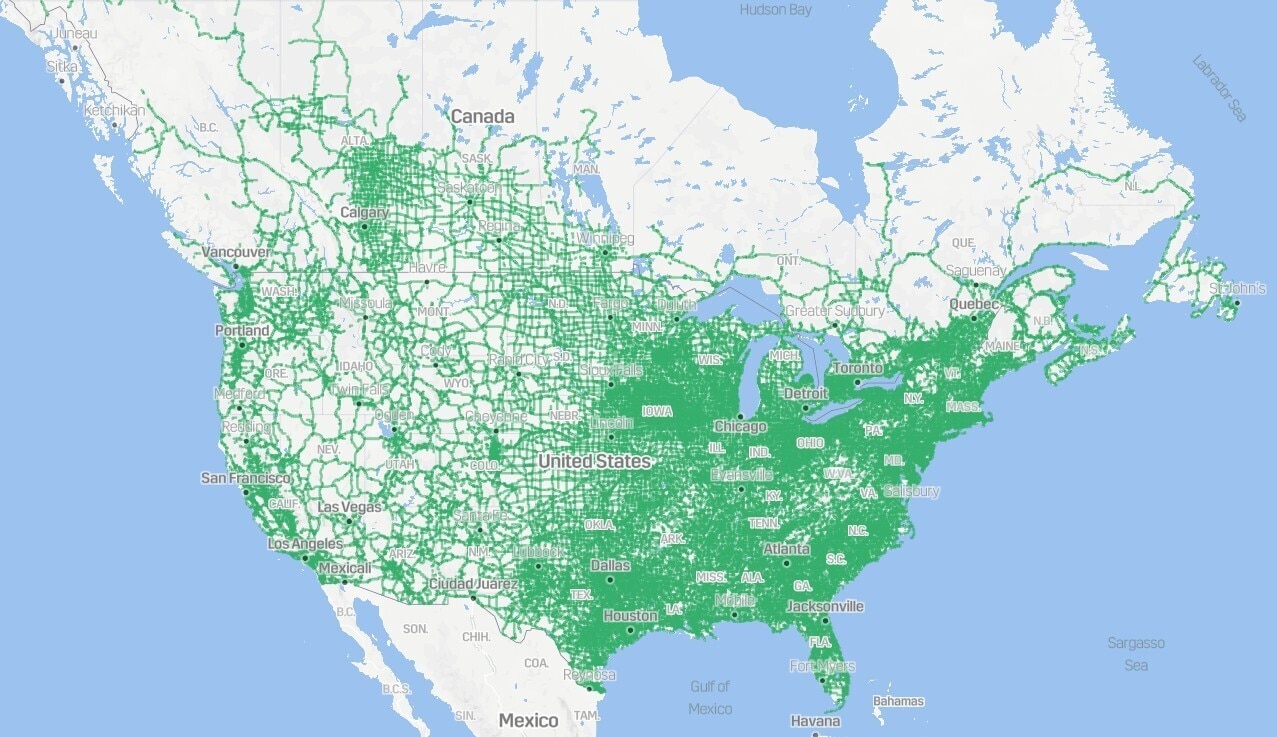
The scale of this endeavor is significant. Super Cruise launched in 2017 on the Cadillac CT6 as the industry's first true hands-free driver assistance technology. Our compatible road network has grown to more than 600,000 miles across the U.S. and Canada, GM customers have driven more than a billion hands-free miles, and there are nearly 750,000 Super Cruise-equipped vehicles on the road across over 20 models.
The map network continues to grow as new compatible roads are added with over-the-air software updates. Eligible vehicles receive periodic map updates automatically, at no additional charge. As the road network, fleet, and update cadence expand simultaneously, the delivery of this information becomes increasingly important.
GM’s answer is Data Over the Air (DOTA), a fast and lightweight approach to updating maps continuously, giving customers a better driving experience. DOTA moves GM from large regional deliveries to a targeted model that sends each vehicle only the data it needs, when it needs it. The result is fresher maps, less overhead, and a delivery system that can scale as GM’s broad portfolio evolves.
From one map to more than 20K tiny maps
Before DOTA, GM delivered Super Cruise map updates as a single map. That was the right architecture in 2017. The road network was smaller at the time, the map fit comfortably in the module's onboard storage, and the fleet was small enough that shipping a full regional map to every vehicle was manageable. A vehicle held the full regional map onboard and received periodic incremental updates to keep it current. Best of all, it worked without a service visit.
This approach established an important capability: GM could update eligible vehicles with over-the-air updates rather than relying on physical service events. That system continues to support much of the Super Cruise fleet on the road today.
What changed was scale. In a single-map model, every vehicle carries—and every update touches—the entire region. As coverage and the fleet grew, three issues became pronounced.
The map grew against fixed onboard storage. Every newly mapped road added to the same database on every vehicle.
Updates took too long to install. A region-sized package could take hours to download, meaning that a single update could span multiple drives.
Vehicles received data they might not ever use. For example, a vehicle in Florida still received updates for Maine and British Columbia, because the delivery unit was the region, not the road.
DOTA changes this model. Instead of treating the map as one monolithic package, it breaks the map into small geographic units called tiles. The vehicle can download the tiles relevant to its location and continue retrieving additional tiles as it moves through the world.
How map tiles work
Smaller delivery units (tiles) are easier to download, install, and refresh. They also reduce the need for every vehicle to store a complete regional dataset onboard.
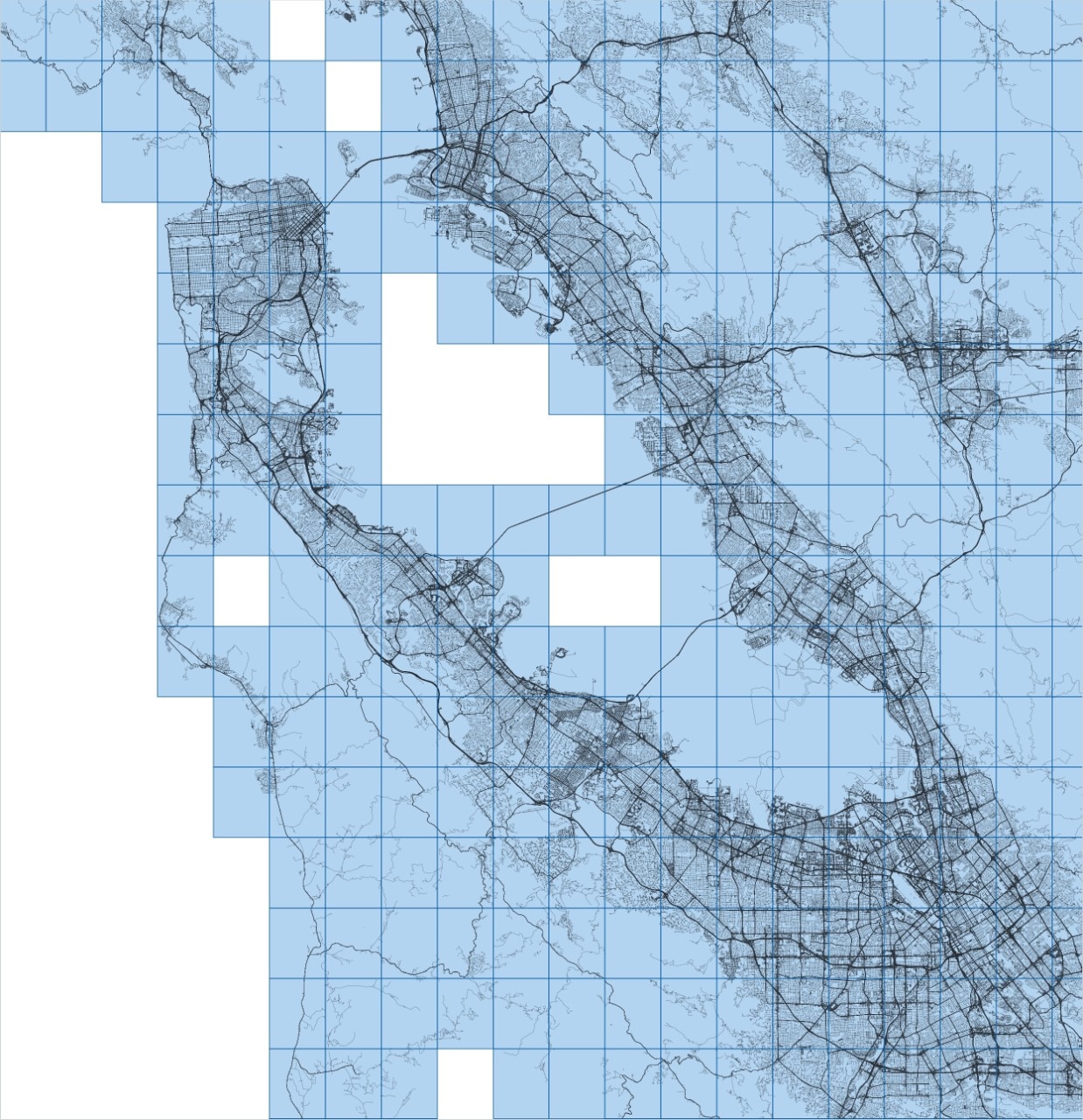
Image caption: Road geometry from Super Cruise map tiles across the San Francisco Peninsula. The level‑5 geohash grid is uniform: every tile spans the same area, regardless of how much map data falls inside it.
Each tile covers one geohash, a standard system for dividing the world into a grid. Vehicles download tiles based on their location, then continue retrieving additional relevant tiles as they move.
That shift changes how the map delivery and refresh models operate. Smaller downloads are easier to deliver, install, and refresh frequently. A tile-based model also removes the need for every vehicle to store a full regional dataset onboard. Instead, GM can deliver map data to the vehicle in much smaller pieces, closer to when it is needed.
Why GM built and owns the stack
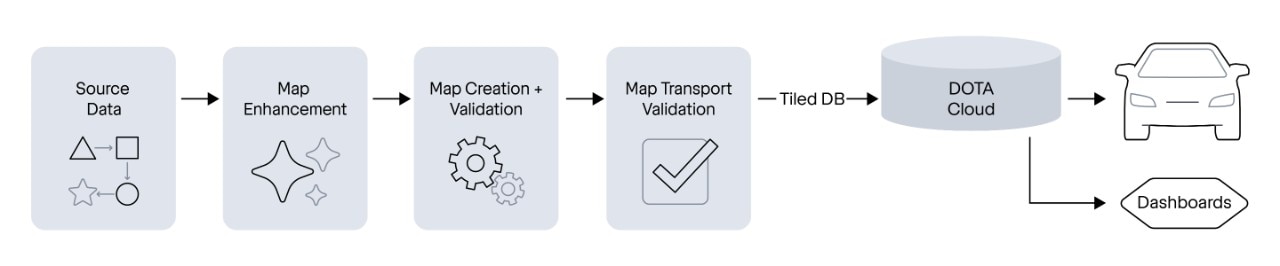
DOTA’s biggest advantage is that GM owns the entire end-to-end platform. A GM-developed embedded client works with GM-owned backend services to give engineering teams direct control over how data is selected, delivered, validated, monitored, and improved.
On the backend, DOTA is built around two core services: Update Manager and Campaign Manager. Update Manager provides vehicles with the download URLs they need when the vehicle starts, and it also records download, verification, and installation status for traceability. Campaign Manager gives GM control over which map versions, configurations, or other data packages are delivered to specific vehicles or vehicle groups.
Overall, this fully owned in-house solution provides GM with some key benefits:
Flexibility to adapt and optimize: GM is not locked into a fixed external delivery model, so engineering can adjust behavior, tune rollout strategies, respond quickly to issues, and tailor campaigns to evolving Super Cruise program needs.
Scalable, CDN-based delivery: Content is published through a content delivery network (CDN), enabling vehicles to download data directly from the CDN while GM services handle delivery coordination, targeting, and reporting.
Robust operational visibility and control: GM-hosted services and internal dashboards support system monitoring, debugging, and performance tracking, with metrics built from map update requests, status messages, policies, campaigns, and software release data, and both executive and engineering dashboards monitoring live vehicle performance.
That visibility makes DOTA more than a content pipeline. It gives the team the data and feedback needed to diagnose potential issues, improve reliability, and shape future enhancements.
The result: More frequent updates at scale
From an engineering and operations standpoint, DOTA is designed to improve three things at once: cost, efficiency, and scalability.
By delivering only the data each vehicle needs, DOTA reduces unnecessary data transfer. Smaller units also make updates more efficient than large regional package installs. Because the system is tile-based, it scales more naturally as map coverage, vehicle populations, and data needs grow.
This leads to more frequent updates. Maps are pushed to customers three times more often with DOTA than with older delivery models, giving them fresher and better data more often.
Delivery performance has also been strong. Customers have been adopting the latest map updates extremely fast with exceptionally high rates of success.
The next generation of DOTA
The first version of DOTA solved one problem: how to deliver a growing map efficiently to a growing fleet. The next generation must support more roads and greater map detail while serving two connected needs: delivering map data to vehicles and making that same data available to the end-to-end driving model during training. Both demands rely on the same delivery platform, with the next generation of DOTA building on the lessons of the first.
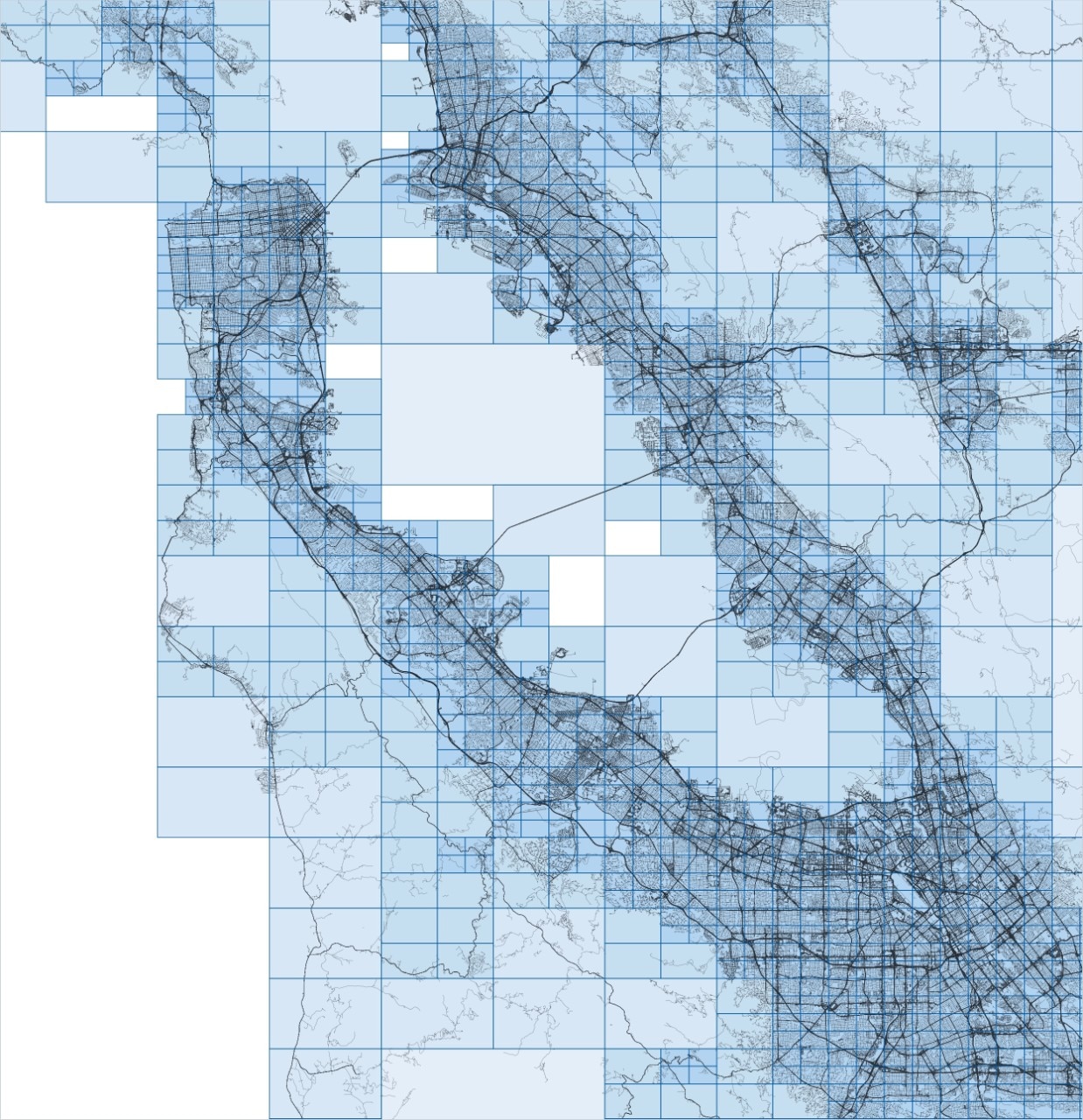
One potential area for improvement is changing the nature of how the world is divided into tiles. In the current system, a fixed grid is used, which treats every part of the world the same way, but the world is not uniform. Today, each tile can contain vastly different amounts of map data: an urban tile may capture a dense network of roads and intersections, while a rural tile may contain only a few roads. The next generation of the map moves to a dynamic quadtree, where tiles subdivide based on the density of the underlying map data. This creates tiles that are more consistent in size across the network.
The more notable change is how Super Cruise uses map data. GM's next-generation Super Cruise will use a single model that processes raw sensor inputs to help determine the path the vehicle takes. Map data serves two roles: it is an input the model uses during driving and part of the data used to train the model.
Training and the vehicle need the same map data, so the next generation of DOTA serves both. Rather than simply a reference, the map is treated like a sensor, held to the same standard as every other sensor on the vehicle, it must be current, precise, and available when the system needs it.
In addition to map tiles, the platform supports machine learning models, configurations, and other data packages. That broader scope is central to the platform’s long-term value. This is also where DOTA connects to GM’s broader product vision. The same core delivery platform can support multiple environments and future Super Cruise generations rather than serving as a one-off solution for a single release.
A platform for fresher data, faster iteration, and future innovation
The legacy single-map system proved that GM could deliver map data at scale. DOTA further extends that foundation with targeted, software-driven delivery: smaller data units, prioritized updates, and the flexibility to adapt as maps, fleets, and vehicle-data needs grow.
Local priority-driven downloads, GM-owned in-vehicle and backend services, CDN distribution and continuous monitoring work together to make updates more efficient and more visible. Customers can receive fresher map data with less unnecessary downloading. GM gains lower delivery overhead, greater operational control, and a platform that can scale across the vehicle portfolio.
DOTA is already expanding beyond maps to support other vehicle data and prepare for next-generation Super Cruise map delivery. The goal is to improve both throughput and time-to-vehicle—how quickly an update can reach the fleet.
Automated driving systems depend on many tightly connected components: cameras, radar and lidar; perception and sensor fusion; localization; mapping; and control software. Keeping those inputs current is essential to helping the system perform as designed. That’s why GM chose to own the full delivery path. DOTA moves the right data to the right vehicle at the right time, helping keep Super Cruise maps current today while creating a foundation for what comes next.
An update is only as useful as its ability to reach the vehicle in time. DOTA gives GM the control to make that happen at scale, helping customers receive fresher updates more seamlessly while providing a strong foundation for future generations of Super Cruise systems.
1 Always pay attention while driving and when using Super Cruise. Always use Super Cruise in accordance with local laws. Do not use a hand-held device. Requires active Super Cruise plan or trial. Terms apply. Visit Buick.com, Cadillac.com, Chevrolet.com, or GMC.comfor compatible roads and full details.
Summary: GM’s Data Over the Air (DOTA) platform helps keep Super Cruise1 maps current with a highly efficient data delivery system that delivers a more seamless customer experience. Instead of a single map, DOTA uses more than 220,000 small tiles and a prioritization layer to deliver only what each vehicle needs next. A GM-owned end-to-end stack — embedded client, backend services, CDN distribution, and telemetry — lets engineers tune delivery and scale efficiently, creating a reusable OTA foundation for future Super Cruise generations and additional vehicle data types.
Keeping map data current
Assisted and automated driving systems must make real-time decisions in an unpredictable world while coordinating a complex network of hardware and software. For a feature like Super Cruise — GM’s hands-free driver assistance technology — map data is a critical input that must remain current, precise, and available when the system needs it, as roads change and coverage expands.
That makes map delivery a critical component of the product experience. Customers need fast, accurate updates automatically, while engineers need faster, more responsive ways to move updated map data to the vehicle. To meet these demands, existing delivery models needed to evolve to support both significant scaling and the demands of future Super Cruise automated driving technologies. Our engineers met this challenge with the tile-based method.
The challenge is in building a delivery foundation that can keep pace with a growing fleet and increasingly detailed maps, helping future Super Cruise systems continuously send the right updates at the right time.
The scale of this endeavor is significant. Super Cruise launched in 2017 on the Cadillac CT6 as the industry's first true hands-free driver assistance technology. Our compatible road network has grown to more than 600,000 miles across the U.S. and Canada, GM customers have driven more than a billion hands-free miles, and there are nearly 750,000 Super Cruise-equipped vehicles on the road across over 20 models.
The map network continues to grow as new compatible roads are added with over-the-air software updates. Eligible vehicles receive periodic map updates automatically, at no additional charge. As the road network, fleet, and update cadence expand simultaneously, the delivery of this information becomes increasingly important.
GM’s answer is Data Over the Air (DOTA), a fast and lightweight approach to updating maps continuously, giving customers a better driving experience. DOTA moves GM from large regional deliveries to a targeted model that sends each vehicle only the data it needs, when it needs it. The result is fresher maps, less overhead, and a delivery system that can scale as GM’s broad portfolio evolves.
From one map to more than 200K tiny maps
Before DOTA, GM delivered Super Cruise map updates as a single map. That was the right architecture in 2017. The road network was smaller at the time, the map fit comfortably in the module's onboard storage, and the fleet was small enough that shipping a full regional map to every vehicle was manageable. A vehicle held the full regional map onboard and received periodic incremental updates to keep it current. Best of all, it worked without a service visit.
This approach established an important capability: GM could update eligible vehicles with over-the-air updates rather than relying on physical service events. That system continues to support much of the Super Cruise fleet on the road today.
What changed was scale. In a single-map model, every vehicle carries—and every update touches—the entire region. As coverage and the fleet grew, three issues became pronounced.
- The map grew against fixed onboard storage. Every newly mapped road added to the same database on every vehicle.
- Updates took too long to install. A region-sized package could take hours to download, meaning that a single update could span multiple drives.
- Vehicles received data they might not ever use. For example, a vehicle in Florida still received updates for Maine and British Columbia, because the delivery unit was the region, not the road.
DOTA changes this model. Instead of treating the map as one monolithic package, it breaks the map into small geographic units called tiles. The vehicle can download the tiles relevant to its location and continue retrieving additional tiles as it moves through the world.
How map tiles work
Smaller delivery units (tiles) are easier to download, install, and refresh. They also reduce the need for every vehicle to store a complete regional dataset onboard.
Each tile covers one geohash, a standard system for dividing the world into a grid. Vehicles download tiles based on their location, then continue retrieving additional relevant tiles as they move.
That shift changes how the map delivery and refresh models operate. Smaller downloads are easier to deliver, install, and refresh frequently. A tile-based model also removes the need for every vehicle to store a full regional dataset onboard. Instead, GM can deliver map data to the vehicle in much smaller pieces, closer to when it is needed.
Why GM built and owns the stack
DOTA’s biggest advantage is that GM owns the entire end-to-end platform. A GM-developed embedded client works with GM-owned backend services to give engineering teams direct control over how data is selected, delivered, validated, monitored, and improved.
On the backend, DOTA is built around two core services: Update Manager and Campaign Manager. Update Manager provides vehicles with the download URLs they need when the vehicle starts, and it also records download, verification, and installation status for traceability. Campaign Manager gives GM control over which map versions, configurations, or other data packages are delivered to specific vehicles or vehicle groups.
Overall, this fully owned in-house solution provides GM with some key benefits:
- Flexibility to adapt and optimize: GM is not locked into a fixed external delivery model, so engineering can adjust behavior, tune rollout strategies, respond quickly to issues, and tailor campaigns to evolving Super Cruise program needs.
- Scalable, CDN-based delivery: Content is published through a content delivery network (CDN), enabling vehicles to download data directly from the CDN while GM services handle delivery coordination, targeting, and reporting.
- Robust operational visibility and control: GM-hosted services and internal dashboards support system monitoring, debugging, and performance tracking, with metrics built from map update requests, status messages, policies, campaigns, and software release data, and both executive and engineering dashboards monitoring live vehicle performance.
That visibility makes DOTA more than a content pipeline. It gives the team the data and feedback needed to diagnose potential issues, improve reliability, and shape future enhancements.
The result: More frequent updates at scale
From an engineering and operations standpoint, DOTA is designed to improve three things at once: cost, efficiency, and scalability.
By delivering only the data each vehicle needs, DOTA reduces unnecessary data transfer. Smaller units also make updates more efficient than large regional package installs. Because the system is tile-based, it scales more naturally as map coverage, vehicle populations, and data needs grow.
This leads to more frequent updates. Maps are pushed to customers three times more often with DOTA than with older delivery models, giving them fresher and better data more often.
Delivery performance has also been strong. Customers have been adopting the latest map updates extremely fast with exceptionally high rates of success.
The next generation of DOTA
The first version of DOTA solved one problem: how to deliver a growing map efficiently to a growing fleet. The next generation must support more roads and greater map detail while serving two connected needs: delivering map data to vehicles and making that same data available to the end-to-end driving model during training. Both demands rely on the same delivery platform, with the next generation of DOTA building on the lessons of the first.
One potential area for improvement is changing the nature of how the world is divided into tiles. In the current system, a fixed grid is used, which treats every part of the world the same way, but the world is not uniform. Today, each tile can contain vastly different amounts of map data: an urban tile may capture a dense network of roads and intersections, while a rural tile may contain only a few roads. The next generation of the map moves to a dynamic quadtree, where tiles subdivide based on the density of the underlying map data. This creates tiles that are more consistent in size across the network.
The more notable change is how Super Cruise uses map data. GM's next-generation Super Cruise will use a single model that processes raw sensor inputs to help determine the path the vehicle takes. Map data serves two roles: it is an input the model uses during driving and part of the data used to train the model.
Training and the vehicle need the same map data, so the next generation of DOTA serves both. Rather than simply a reference, the map is treated like a sensor, held to the same standard as every other sensor on the vehicle, it must be current, precise, and available when the system needs it.
In addition to map tiles, the platform supports machine learning models, configurations, and other data packages. That broader scope is central to the platform’s long-term value. This is also where DOTA connects to GM’s broader product vision. The same core delivery platform can support multiple environments and future Super Cruise generations rather than serving as a one-off solution for a single release.
A platform for fresher data, faster iteration, and future innovation
The legacy single-map system proved that GM could deliver map data at scale. DOTA further extends that foundation with targeted, software-driven delivery: smaller data units, prioritized updates, and the flexibility to adapt as maps, fleets, and vehicle-data needs grow.
Local priority-driven downloads, GM-owned in-vehicle and backend services, CDN distribution and continuous monitoring work together to make updates more efficient and more visible. Customers can receive fresher map data with less unnecessary downloading. GM gains lower delivery overhead, greater operational control, and a platform that can scale across the vehicle portfolio.
DOTA is already expanding beyond maps to support other vehicle data and prepare for next-generation Super Cruise map delivery. The goal is to improve both throughput and time-to-vehicle—how quickly an update can reach the fleet.
Automated driving systems depend on many tightly connected components: cameras, radar and lidar; perception and sensor fusion; localization; mapping; and control software. Keeping those inputs current is essential to helping the system perform as designed. That’s why GM chose to own the full delivery path. DOTA moves the right data to the right vehicle at the right time, helping keep Super Cruise maps current today while creating a foundation for what comes next.
An update is only as useful as its ability to reach the vehicle in time. DOTA gives GM the control to make that happen at scale, helping customers receive fresher updates more seamlessly while providing a strong foundation for future generations of Super Cruise systems.
1Always pay attention while driving and when using Super Cruise. Always use Super Cruise in accordance with local laws. Do not use a hand-held device. Requires active Super Cruise plan or trial. Terms apply. Visit Buick.com, Cadillac.com, Chevrolet.com, or GMC.comfor compatible roads and full details.